
Therapy pets without a doubt can improve mood and facilitate social interaction for people living with dementia. Pets can also have a calming effect, help with dementia-related behavioral problems, increase physical activity, and add a loving dimension to a care community.
Interestingly, and sort of oddly, when I searched for online resources about therapy pets and Alzheimer’s I found many articles about robotic animals for people living with dementia. Having raised and trained three amazing therapy cats over the past 14 years I clearly feel a bias towards real animals for pets. They, however, require much care and effort, and that could be a major barrier to many who are already struggling with caring for their loved one as it is. And so we have choices for our loved ones— some with intricate mechanical movements and some who will need a real litter box.
When I began working with elders in a post acute nursing facility, I was lucky to have a local therapy pet group bring a variety of animals to visit with my residents. And I truly mean variety. Over 30 years later I still recall some stunning responses from residents.
A German Shepherd in the program visited regularly with a resident who was left unable to speak or walk following a severe stroke. During my 1:1 visits with her over several months she would not look at me or respond to me. I decided to pair this gifted dog with her and other residents who were bed bound, not sure what to expect. During his therapy sessions with this resident she would quite visibly become alert, sit up, smile, pet and talk to the dog. Yes — talk to the dog.
Another example was the fantastic response residents had from visiting chickens. I imagine some of the residents grew up taking care of chickens on the family farm (WWII generation) but was surprised to see how the chickens brought withdrawn residents out of their rooms to call to them and watch them bob about in the main common area. Each time the animals were dropped off to roam about, the institutional feeling of the facility was transformed into a joyful, fun place to hang out.
My personal observations about cats can go on and on. Their intelligence is legendary and their connection with humans goes back many thousands of years. The Egyptians believed cats to have supernatural powers, and rightfully so as cats served their families by protecting their grain supplies from rodents. Egyptian mothers often had statues of cats in their homes because their role was so important in preventing their children from starving.
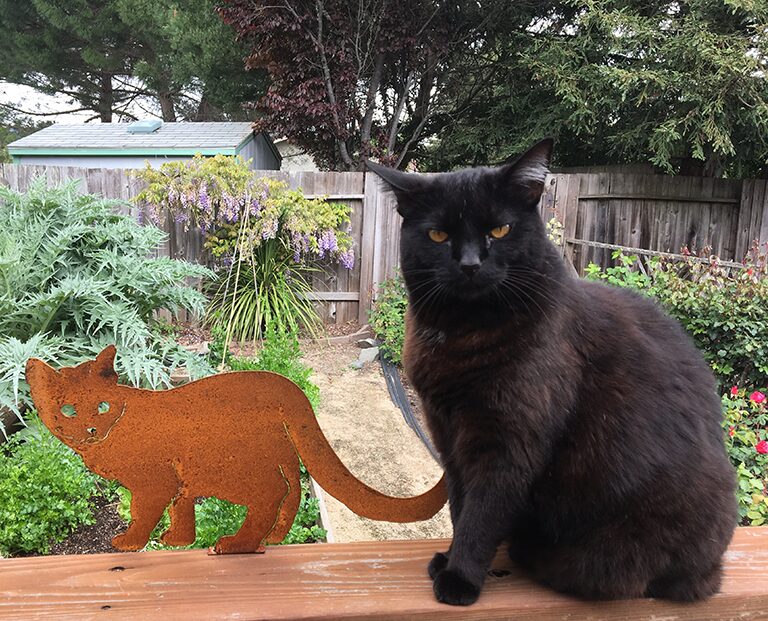
The Creekside Cottage and Place therapy cats have comforted and soothed many residents when they most needed it. They welcomed visitors and helped grandchildren feel at ease. I would invite grandchildren to look carefully in the garden for our extra special fury team members, and the cats never disappointed them. During our most recent state licensing evaluation just a few weeks ago, our therapy cat Izzy stayed by the evaluator’s side for the entire 5 hour session. Including wrapping herself around his laptop computer. I was the most relaxed I have ever been during an annual licensing evaluation.
It is with deep respect and ever growing gratitude that I say thank you to our two astounding and amazing therapy cats: Izzy and Baby. We had to say goodbye to both of them this year and miss them dearly. They were in service from 2011 to 2024. Of all the humans they supported, I must admit that they may have helped me most of all.