
“If you change the way you look at things, the things you look at change.” — Wayne Dyer
A Summer with Buster
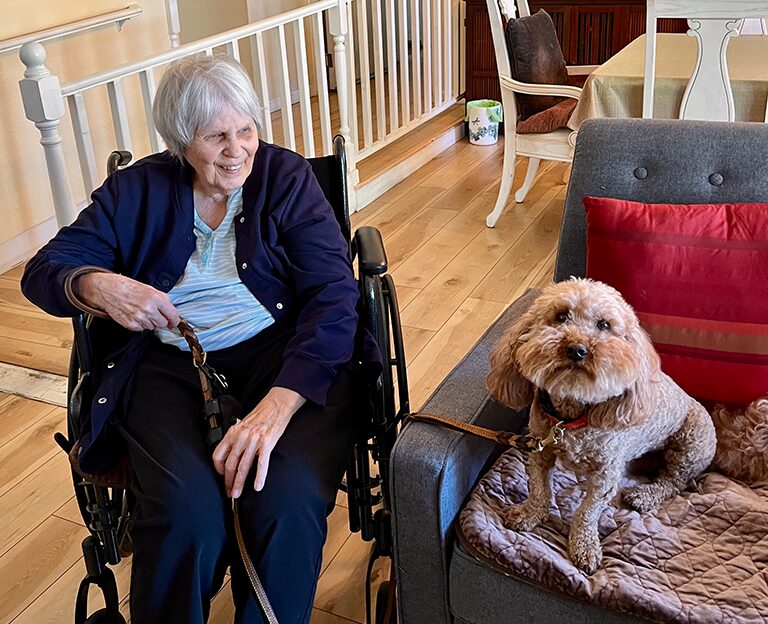
This summer we became dog sitters for a soft, cuddly labradoodle named Buster. We took him everywhere— to work with our residents, to basketball games with our grandson, and on hikes in our lovely county parks.
I was keen to see how our residents interacted with him. He was a hit! I personally experienced the calming influence of this super sweet dog as I watched a tough basketball match that our grandson played in — a scenario that often causes me to feel anxious. And yet I did not fall into my usual pattern of doubt and worry, but rather felt completely at ease. Just the dog’s presence next to me seemed to bump my brain waves into a relaxed yet alert state.
I became aware of how my energy could affect the dog, and perhaps that in itself helped me to see the basketball game in a different way.
Looking Ahead: Puppy Parents in 2026
This experience turned out to be pivotal in moving forward with adopting an Australian Labradoodle. We will be puppy parents in April 2026!
I am excited to learn as much as I can about caring for and training our dog. He or she will be coming from an amazing set of parents. The breeder we are working with is just as passionate about her operation as we are about our care homes and asked many thoughtful questions about our active lifestyle and our residents’ needs. She chose two doggie parents that are a terrific match for us due to their gentle demeanor, fun-loving nature, and emotional intelligence.
This blog entry is just the beginning. We will create a training program with the input of experts, our residents, and our team members. I can’t wait to share updates as we move forward.

Why Therapy Dogs Matter in Dementia Care
Interacting with therapy dogs offers multiple benefits to people living with brain change, including:
- Reduced behavioral symptoms: Pet visits have been shown to reduce agitation, irritability, and aggression.
- Emotional well-being: Petting or cuddling a dog can trigger mood-boosting hormones (serotonin, oxytocin, endorphins) while lowering stress hormones like cortisol.
- Increased social interaction: Dogs act as conversation starters, encouraging communication even in those who are withdrawn.
- Cognitive stimulation: Activities with dogs can spark memory and communication skills, recalling past pets and encouraging mental engagement.
- Physical activity: From brushing to walking, dog interaction promotes movement and exercise.
- Sense of purpose: Helping care for a dog can provide responsibility and meaning for those still able to participate.
Helpful Dementia Care Resources for September
- Is it “aggression” or the limbic system being overloaded? Explore what may be triggering reactions:
LinkedIn: Time with Teepa - The latest dialogue about how to wrap our minds around aging:
Best Life, Best Death Podcast