
Study after study demonstrates that exercise is good for brain health. The latest in scanning technology now illuminates how the brain responds —brain shrinkage for sedentary life styles and brain enlargement for physically active people. We can also see the number of Alzheimer’s plaques decreasing or increasing in relation to physical activity, even in people with the APOE-4 gene for Alzheimer’s Disease.
Lisa Mosconi, PhD, Director of the Women’s Brain Initiative at Weill Cornell Medical College, points out misconceptions about life style choices and Alzheimer’s risk in her her book, “The XX Brain.” She makes a case that exercise, such as walking, not only helps prevent deterioration but can even turn back the clock and reduce the risk for dementia.
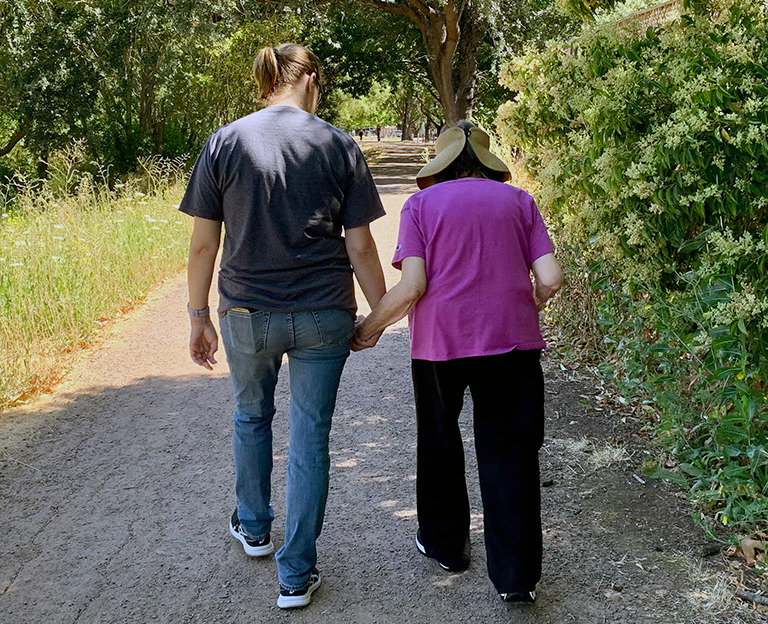
Walking is one of the most accessible ways to get exercise. One only needs a good set of athletic shoes, some time, and a safe route (or indoor treadmill). Walking briskly for 40 minutes 3 x weekly can produce many benefits to brain health. Make it 60 minutes daily and studies show a decrease in cancer risk. As a recent member to the growing community of breast cancer survivors in our country, this motivates me to just get out there and do it.
What about loved ones living with dementia who have impairments to walking? Alzheimer’s, being a progressive disease, will eventually effect the parietal lobe and other areas in the brain related to movement. Many people living with dementia also have arthritis that can impact their mobility. However, the awesome benefits of exercise and brain health also hold true for them, so we need to get creative and find fun ways to get moving.
1. Get one of my favorite specialists on your loved one’s team — a physical therapist. P.T.s are licensed medical professionals who can assess physical conditions affecting mobility, develop safe ways for your loved one to exercise and build strength and balance, review medications, monitor and report blood pressure issues, and support your loved one with the correct assistive devices. Often, physical therapy services are covered by Medicare, and can be ordered by your loved one’s primary care physician. 2. Participate in a local fall prevention or senior exercise program. Our local senior center offers Aikido, Zumba and fitness classes to adults of all abilities. https://cityofpetaluma.org/petaluma-senior-center/ 3. Online classes offer armchair work outs, yoga, tai chi — and many are free.
I look forward to our walking club’s outings, and am grateful for the experience each time. I find us laughing and connecting as we share observations in the neighborhood — “hey, look at that beautiful palm tree” or “that neighbor has such red roses!” During our chair exercise group, we often have the liveliest interactions. Perhaps it is our music selections such as Olivia Newton-John’s “Let’s Get Physical” or ABBA’s “Dancing Queen”. It’s impossible to sit still with that kind of rhythm and vibe.
And now that I have completed this blog entry — it’s time to move.