On the Move

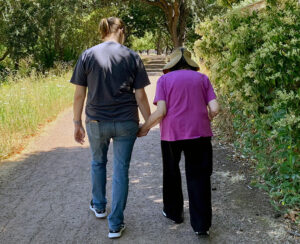
Study after study demonstrates that exercise is good for brain health.  The latest in scanning technology now illuminates how the brain responds —brain shrinkage for sedentary life styles and brain enlargement for physically active people. We can also see the number of Alzheimer’s plaques decreasing or increasing in relation to physical activity, even in people with the APOE-4 gene for Alzheimer’s Disease.  Lisa Mosconi, PhD, Director of the Women’s Brain Initiative at Weill Cornell Medical College, points out misconceptions about life style choices and Alzheimer’s risk in her her book, “The XX Brain.” She makes a case that exercise, such as walking, not only helps prevent deterioration but can even turn back the clock and reduce the risk for dementia.  Walking is one of the most accessible ways to get exercise.  One only needs a good set of athletic shoes, some time, and a safe route (or indoor treadmill). Walking briskly for…
Continue ReadingOn the Move

Hanging Out With Friends Helps Our Brains!

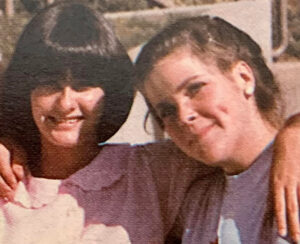
During a long drive back from my 1983 high school reunion this weekend, my mind was flooded with memories. As I allowed these memories to process, I began to feel more and more reconnected to different parts of myself. I believe this is due to the wonderful connections I made 40 years ago, singing in the school choir, playing doubles on the JV tennis team, and participating in the debate team. I was lucky to have terrific friends who cared so much about me long ago, and in turn, who I cared about deeply. Within the very core of us, as human beings, we are social beings. And, it turns out, hanging out with friends not only stimulates but also protects our brains. In his book, The Alzheimer’s Prevention Program, Dr. Gary Small includes studies that confirm socializing with others helps our cognitive ability. Spending time with friends and engaging in lively social…

Continue ReadingHanging Out With Friends Helps Our Brains!

The Arts

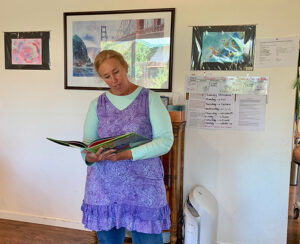
We engage our right hemisphere during activities involving music, drawing, painting, shaping clay, or whatever stirs up our artistic joy. We also retain right hemisphere functioning longer when living with Alzheimer’s, while the left hemisphere function is fading. Below is a poem written with a small group of residents about Friendship — it will make you smile and tear up at the same time. Above, a photo of our art instructor, Diane Stenlund, preparing us for a tropical themed art project by reading a short story to get our creativity flowing. FRIENDSHIP FriendshipConfidenceLong listeningToo bare for one personHealing words helped FriendshipHonestyWhat confidence one getsFrom friendshipBy listeningThe honesty that comesFrom a true friendIs always appreciatedAnd the humorPuts one at ease Oh how we allWish forTrue friendship

Continue ReadingThe Arts

The Rhythm of the Night

This is the rhythm of the nightOh nightThe rhythm of the nightThis is the rhythm of my life— song lyrics, Corona In our field of dementia care, we often say “if the night goes well, so will the day.” Many people living with dementia experience sleep disturbances that affect their quality of life. It can be both difficult to discern the underlying cause and find what helps. As caregivers, we can be astutely aware of the rhythms of the day and night, and make a difference with sleep. As we all understand from personal experience after a good night’s sleep, we feel recharged. And after a poor night’s sleep, we feel foggy and irritable. Sleep time is critically important to brain health as it helps reduce inflammation. Recent studies are showing a strong connection of inflammation in the brain and risk of Alzheimer’s Disease. Sleep also allows the hippocampus, our brain’s supercomputer memory…

Continue ReadingThe Rhythm of the Night

Nourishment

Mother’s Day photo features: Strawberry Rhubarb Masque by Eminence Organic Skin Care Our Mother’s Day facials were nourishing and fun — we had a playful time applying the different products, and especially enjoyed the Strawberry Rhubarb masque. Everyone was glowing afterwards. During each step of the facials I felt the group become more at ease and share in the experience with plenty of laughter. Many mother-daughter and family photos captured the moment. This kind of activity takes thought and organization, but was not difficult or time consuming. And the effect has been lasting. Bringing our family members into the planning and participation is one of my favorite parts of the day because we became more connected in a joyful way, and have more dialogue about upcoming activities and outings together. The Strawberry Rhubarb masque felt and smelled so wonderful, the best word I could come up with is nourishing. Nourishment…

Continue ReadingNourishment

Welcome to My Blog

My current focus is to share helpful resources, experience and insights on caring for loved ones with brain change and dementia.  In the early 1990s I started in the field of elder care doing therapeutic activities in a skilled nursing facility in Oakland.  I was hired with very little experience, but with a degree in music and love for elders. Thankfully, I was lucky to be mentored by amazing people — mostly nurses and physical therapists who, by example, showed me how to respond to difficult conditions with creative and compassionate approaches as we worked toward solving the problems that people living with dementia face every day. These mentors inspired me and motivated me to never give up because with team work, we are sure to make a difference.  What was missing from my experience and training was the perspective of Occupational Therapy. That gap was filled to over flowing by Teepa…

Continue ReadingWelcome to My Blog

Dementia Care

According to the National Institute on Health, 1 in 7 Americans aged 71 and older have some type of dementia. The primary cause of dementia is Alzheimer’s — a neurological breakdown in the brain, causing neurons to die. The second leading cause is vascular dementia, where blood flow is diminished or cut off, causing brain cells to die. Both conditions can be unpredictable in the way they progress. And yet, the brain can still be incredibly resourceful.  In tandem, we as caregivers can develop our own resourcefulness to meet their needs with dignity and compassion. (See Resources page for helpful links.) Often the first thing we think of with dementia is memory loss.  While the hippocampus, our brain’s amazing memory coordinator, is an unfortunate target of Alzheimer’s Disease early on, every area of the brain is experiencing change.   Along with memory loss (usually short term memory to start) there are other brain changes going on that effect movement, vision, language, and sensory perception. How we understand these…

Continue ReadingDementia Care